


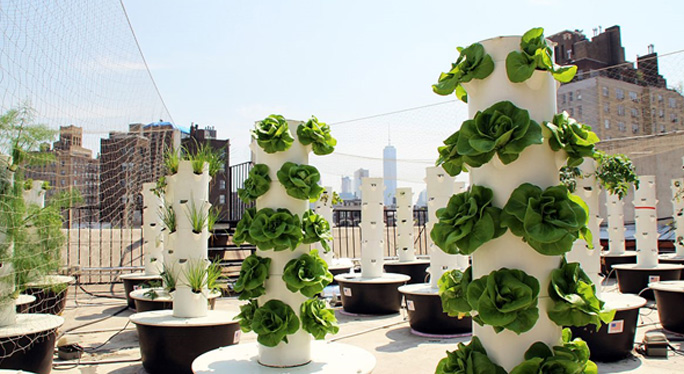
This article is curated to help you understand what vertical farming is all about, how the idea came, and what it is in simple words. So, here is vertical farming simplified for you.
Think of it as high-rise apartments. In a less populated world, having an independent home was affordable, easy to make, and maintain. But now, when things are opposite, a jungle of high-rise apartments one after the other is what we see in most metropolitan cities. So this is exactly what the vertical farming vision is. Less space, more yield.
When was Vertical Farming Introduced to the World?
The term vertical farming was coined by a renowned geologist from the USA, Gilbert Ellis Bailey, in 1915 in a book named Vertical Farming. Later in 1999, the concept was modernised by a Public and Environmental Health Professor at Columbia University - Mr Dickson Despommier, where in one of his projects showed that a skyscraper with plants hung one after the other could feed around 50,000 people using less space and energy.
Also read about 5 Findings of Dickson Despommier - Father of Modern Vertical Farming!
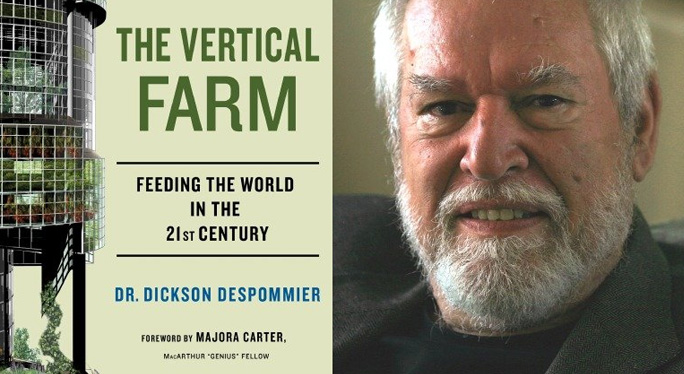
His book gave a fair idea of what and how a vertical farm should look. It was only after that, in 2012, that Skygreens Farm - a fully functional vertical farm came into existence.
Types of Vertical Farming
Vertical farming is divided mainly into three sects, the hydroponics, aquaponics, and aeroponics, under two systems,
1. Indoor Systems are done in a Controlled Environment Setup through the help of artificial lighting, water, and every other source.
2. The Outdoor Setup, or the hanging setup that is done either on walls or vertically stacked set-up but not much control is needed.
● Aeroponics - Aeroponics is a category of vertical farming where the fresh greens are cultivated in air, without the use of soil. The word aeroponics stems from aer, which means air, and ponics, which means labour - air does the work, you read it right!
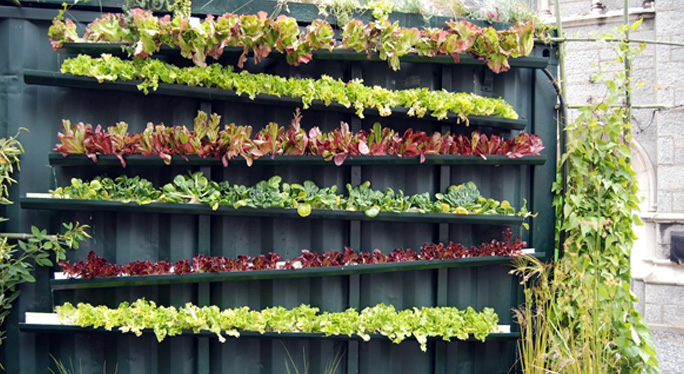
In hydroponics, the plants’ roots are dipped in water. On the other hand, in aeroponics the roots are hung in air, allowing them to absorb more oxygen, resulting in more yield per hectare.
Check out the Importance of Aeroponics. Read our Blog!
Top aeroponics companies in the world include - Aerofarms, Living Green Farms, LetUsGrow, Spacefarms, and more!
● Hydroponics - Hydroponics is exactly the opposite of aeroponics, where roots are submerged in water but no soil, and the water is a complete source for various other nutrients. The roots take the support of substrate, or growing media, such as vermiculite, coconut coir, or perlite. See the full report here.
If one wants to start with curating their hydroponics system, all they would need to do is have Fresh Water, Oxygen, Root Support, Nutrients, and Sufficient Light.
YES! The hydroponic produce is much healthier than the conventional produce.
The simple reason is that hydroponics uses water as the primary growth medium and is a soilless farming method. In this case, the farmer has full control of the nutrients provided to each plant category.

In addition, it is environmentally friendly since the water operates in a closed-loop system, allowing it to be recycled rather than wasted, thus using 95% less water compared to traditional farming methods.
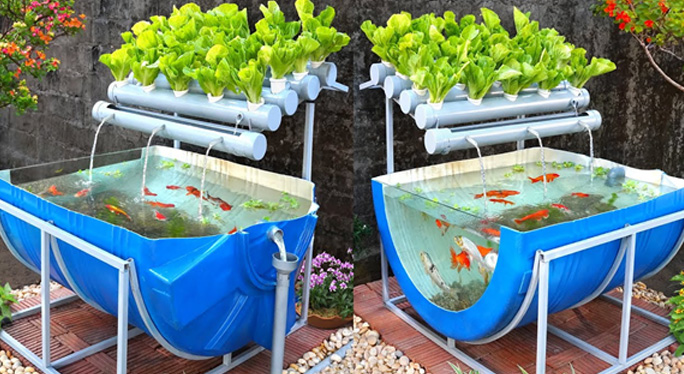
● Aquaponics - This is the third method of vertical farming, which combines aquaculture (fish farming) and hydroponics (soilless plant cultivation).
For anyone seeking a simple explanation, the technique integrates fish and plants in a single loop. The fish produce waste, which is then converted into nutrients that the plants absorb. This is one of the most ecosystem-friendly methods, as it allows you to grow plants while simultaneously raising fish.
To know more about Aquaponics, you can read this blog.
Follow Vertical Farming Dubai’s news and latest updates on our LinkedIn page to keep yourself updated regarding the latest vertical farming news. We post daily about the industry size, Vertical Farming Middle East, and our event - the Global Vertical Farming Show. Click Here.
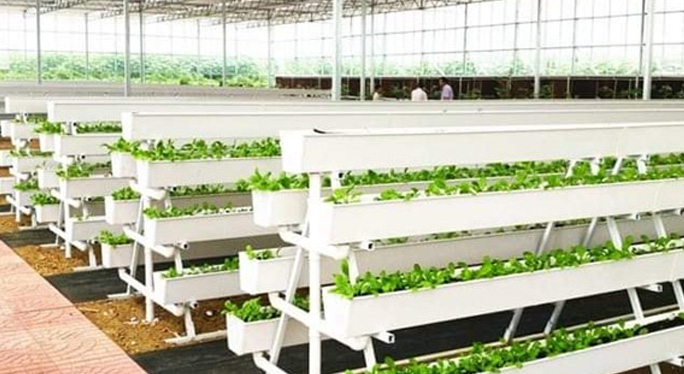
The horizontal space to grow the crops is diminishing globally, and when you talk about the Middle East, which is all desert, vertical farming Dubai’s revolution brings new hope, and now we see that the wave of vertical farming goes beyond UAE to the entire world, particularly in the Middle Eastern countries.
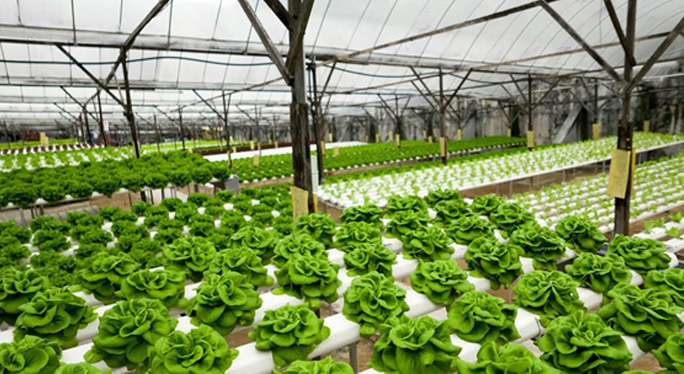
The Middle East and North Africa (MENA) region has a total land area of 74 million hectares. Surprisingly, with 22 million hectares currently cultivated, about 5 million hectares are irrigated. Read the report of the FAO here.
Food security challenges in the Middle East are not new. This region has a hot and humid climate, making traditional farming more difficult and next to impossible. This is when we see that utilising vertical space is a must.
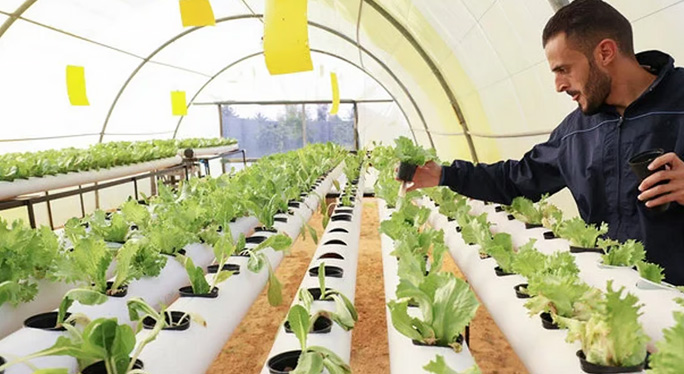
The region is growing rapidly, and as part of the expansion, Emirates Bustanica in Dubai is the World’s Largest Vertical Farm. Many new upcoming Projects are underway, including GigaFarms. Project execution for the UAE’s next big vertical farm - GigaFarm began in 2024. This innovative farm combines six different technologies to create a self-sustaining, closed-loop system. The goal is to use resources as efficiently as possible to ensure no waste ends up in landfills.
Moreover, 500 vertical farms across the Middle East are set to come up in the next five years, using a 'Farming-as-a-Service' model and AI-powered systems to improve productivity. This is a collaboration between Crysp Farms and Alesca Technologies.
You name Vertical Farming, and the Middle East has it!
Today, the global vertical farming market is said to reach USD 70.70 billion by 2033 with a CAGR of 28.3%. Read the report here.
If you are looking to expand your vertical farming business in the UAE, it is essential to exhibit, network, and promote your brand to key stakeholders, including ADAFSA, AAAID, EDB, Food Tech Valley, WGEO, STRI Park, Emirates Bustanica, Pure Harvest Smart Farms, Veggitech, Gracia Group, Uns Farms, and Themar Al Emarat. These bodies are not only revolutionising vertical farming in the UAE and positioning Dubai as a regional leader, but also offering growth-oriented companies like yours the opportunity to scale in promising markets such as the Middle East.
Check the expo’s details here.
We hope you liked our vertical farming simplified version. To read more blogs, click here.
Also, do register for the 6th Global Vertical Farming Show - the Middle East’s Largest & Only Exclusive Vertical Farming Event @ Book My Booth.
